


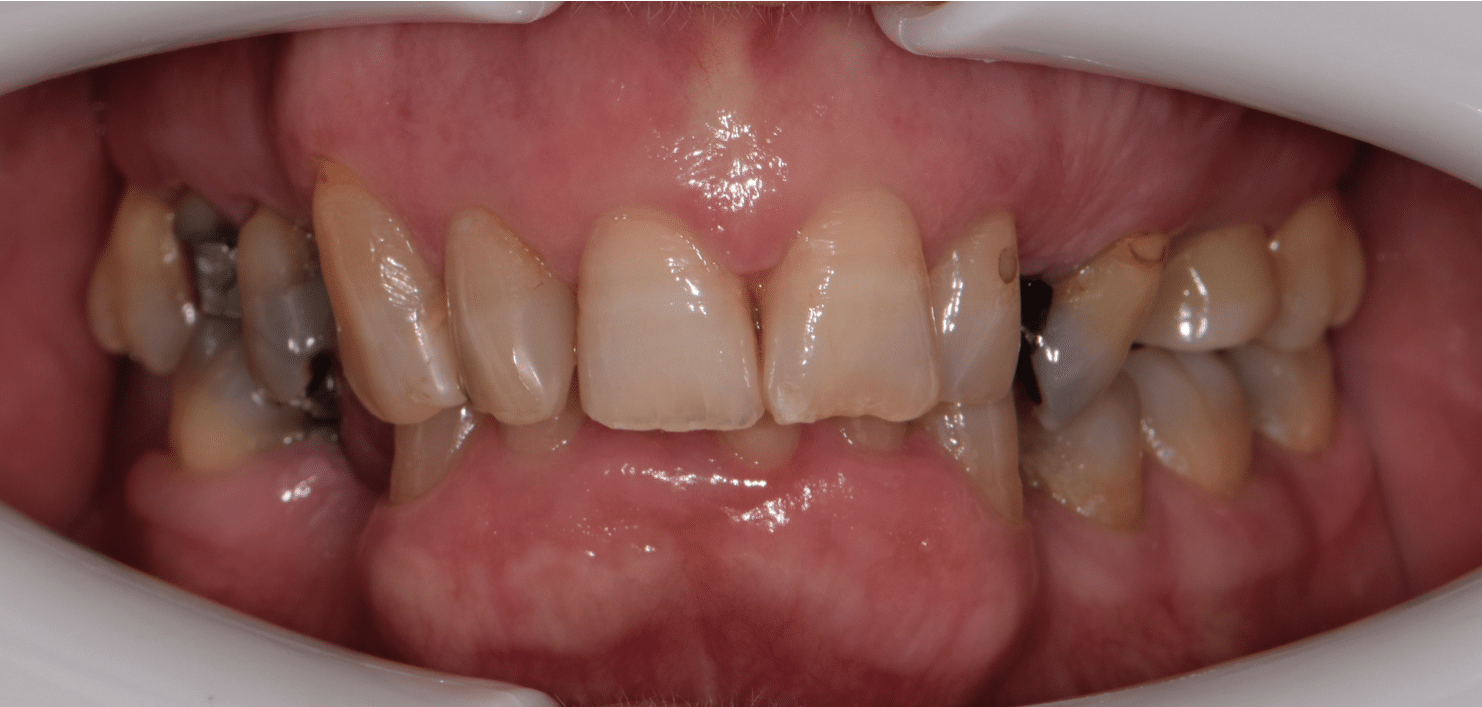
I strongly believe that every picture tells a story and if we pay enough attention, we’ll see that devil is in the details. Recently I saw a patient who reminded me of the blog I wrote not so long ago about the consequence of tooth loss. She had a few teeth removed many years ago but never got around to replacing them. The change in her mouth occurred slowly that it was difficult to recognise from day to day. Looking at the photos below, a story emerges.
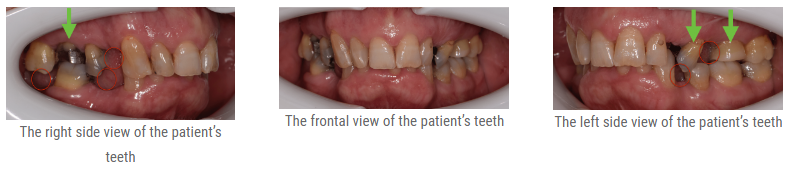
Over the years as she removed a few back teeth, the remaining teeth had to do extra work to compensate. The teeth in function were subjected to a lot of stress and were frequently broken (Marked with green arrows). The constant repairs caused much frustration to the patient as well as the dentist because the bigger problem was not being recognised.
These teeth wore down at a quicker rate and appeared to be shorter than neighbouring teeth. As the teeth got shorter, the bite also deepened to the point where lower front teeth were no longer visible. From the side view, the lower front teeth almost bit onto the roof of her mouth which will cause injury to the gum. As the jaw had to close higher, this led to extra stress and problem at the jaw joint. Ear ache and headache sometimes can be felt.
With a bit of imagination, we can visualise what her teeth used to be like. The red dotted line estimates where the teeth should be before they got shortened through excessive use.
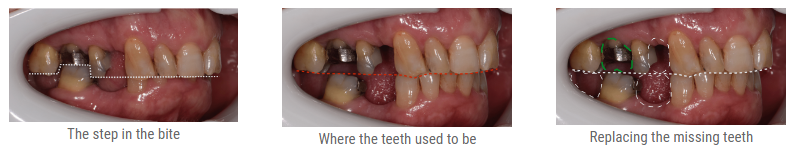
I find that the step in the bite gives a great clue on how much tooth has been lost. To fix this problem, I would simply reverse the damaging process or what I call a “dental rehabilitation”. This means the worn down teeth need to be build up and protected with some form of capping (green lines) Then the missing teeth (white lines) need to be replaced to prevent the same problem from reoccurring.
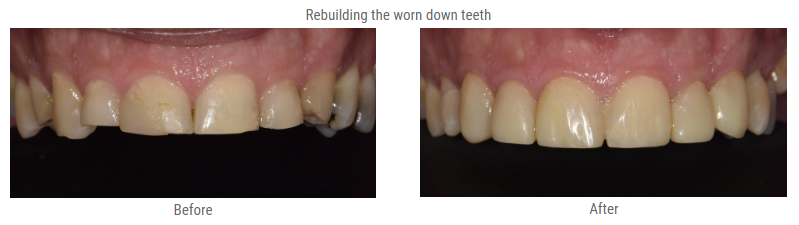
Removing teeth without replacing them can lead to excessive stress and damage to the remaining teeth. This translates to the ongoing cost of frequent repairs as well as more involved reconstructive work down the road. Prevention is always the key. This means missing teeth should be replaced sooner rather than later. Or better still, every effort should be made to save the teeth before removing them.
To your healthy smile.
Dr. Supa
Supa Dental, Melton.