


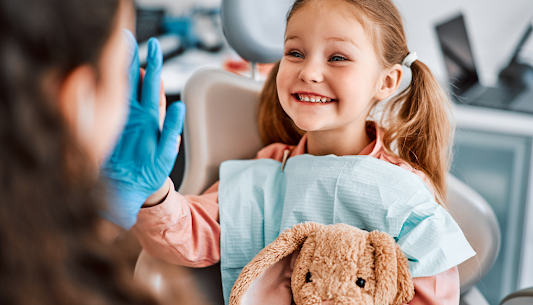
Why Early Dental Visits Matter
Many parents assume the first dental visit should wait until school age — but earlier, low-pressure check-ins make a big difference.
At Supa Dental in Melton, we encourage families to bring children for an introductory visit around age 1–2 not to make them sit still in the chair, but to gently familiarise them with new faces and surroundings. An early appointment helps us:
- Build rapport at your child’s pace
- Ease them into the dental environment without expectations
- Check tooth eruption, spacing and gum health
- Provide parents with practical guidance on brushing, habits, diet and what to look out for
- Prevent early decay before it becomes a problem
Most importantly: a positive early experience shapes how children feel about dental care for years to come.
You Know Your Child Best
Every child warms up differently.
Some are confident meeting new people right away. Others are more cautious and need a few gentle introductions before they feel comfortable.
There is no one perfect age — parents are the best judge of when their child is ready to meet a new adult in a new environment.
Our role is to support your child at whatever stage they’re at, without pressure or expectations. The goal is simply to help them feel safe, welcome, and in control.
Make Dentist Visits Feel “Normal” Early On
One of the easiest ways to build familiarity is to bring your child along to your own 6-monthly dental visits. They don’t need to sit in the chair — just being in the room helps them learn:
- Mum or Dad sees the dentist too
- The dental clinic is a normal, friendly place
- Nothing scary happens here
If you do bring your child to your appointment, it can help to have another adult with you to supervise them while you’re in the chair. This keeps the visit relaxed for everyone.
Use Positive, Age-Appropriate Language
Children listen closely to your tone and wording. Keep descriptions simple and upbeat:
- “The dentist helps keep your teeth strong.”
- “They’ll count your teeth to make sure they’re healthy.”
- “We’re going to meet a tooth-expert today!”
Avoid words that can create fear, even unintentionally:
- “hurt”
- “needle”
- “drill”
- “don’t be scared” (it implies there is something to fear)
Play ‘Dentist’ at Home to Build Confidence
Turning the idea of a dental visit into a game helps children feel in control and excited. Try:
- Counting their teeth with a toothbrush
- Practising “open wide” like a crocodile
- Reading picture books about going to the dentist
- Watching short, friendly kids' videos that show what happens at a dental visit
- Letting them be the “dentist” and check your teeth
This repetition builds comfort long before they walk into the clinic.
What Happens at Their First Visit
At Supa Dental Melton, the first visit is gentle, friendly, and entirely child-led. We typically:
- Have a warm chat so your child feels comfortable
- Let them explore and get used to the environment
- Count their teeth
- Check their gums and early development
- Offer simple brushing and care tips
- Celebrate their effort — no matter how small
There is no pressure, no forcing, and no expectation to complete anything they’re not ready for. Our priority is to make the experience positive.
Does Medicare Cover Kids’ Dental?
Many families are eligible for the Child Dental Benefits Schedule (CDBS), which covers basic dental services for children aged 0–17.
If you’re unsure whether your child qualifies, we can check their eligibility in just a few seconds — simply ask our team.
Give Your Child a Confident Start
A gentle, supportive introduction to the dentist sets the foundation for lifelong oral health and stress-free visits.
If you’d like to book your child’s first appointment, our friendly team at Supa Dental in Melton would love to welcome your family and help make the experience fun and positive.